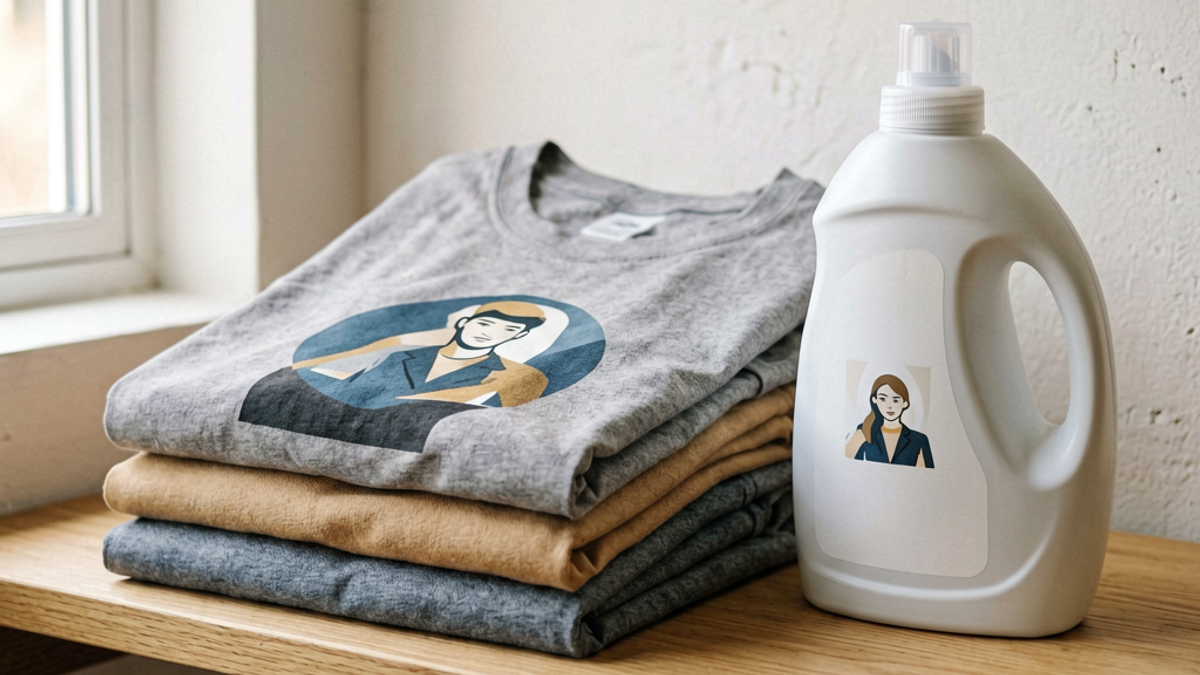
How Do You Wash and Care for Graphic Tees So Prints Don't Crack or Fade?
Wash graphic tees in cold water, inside out, on a gentle cycle, then hang dry — skip the dryer, skip the softener, and never iron the print. That's the entire routine in one sentence. The rest of...
Sylvie Vance
•
Wash graphic tees in cold water, inside out, on a gentle cycle, then hang dry — skip the dryer, skip the softener, and never iron the print. That's the entire routine in one sentence. The rest of this guide breaks down why each step matters, what temperatures and detergents actually work, and how to keep a graphic tee looking new for 2–3 years instead of cracking after ten washes.
The 6-Step Wash and Care Routine
Treat graphic tees like a category of garment, not like the rest of your laundry. The print — especially plastisol and discharge ink — is a bonded layer on top of or inside the cotton, and standard laundry habits shred it. Here's the routine, in order, every time.
Step 1: Pre-Treat Stains Before the Wash
If you got something on the print — food, sweat, deodorant marks — spot-treat it before the shirt goes in the machine. Use a small amount of mild liquid detergent (a drop, not a glob) directly on the stain, gently work it in with your finger, and let it sit for 5–10 minutes. Skip bleach, skip oxygen bleach, skip stain sticks. Any of those will either fade the print or weaken the cotton around it.
Step 2: Turn the Tee Inside Out
Always. This is the single highest-leverage habit. Inside-out washing protects the print from direct abrasion against the drum, against zippers and buttons from other garments, and against the agitation that drives micro-cracks in the ink. It also reduces pilling on the outside face of the cotton.
Step 3: Use Cold Water (Below 30°C / 86°F)
Cold water protects both the cotton fibers and the print binder. Hot water (anything above 40°C / 104°F) opens up the cotton fibers and softens the print adhesive, which is what causes cracking and peeling over time. Modern cold-water detergents clean effectively enough for everyday wear — you're not stripping grease off a work shirt, you're washing out body soil and city dust.
Step 4: Choose a Mild, Dye-Free Detergent
Use a clear liquid detergent without dyes, fragrances, or whiteners. Tide Free & Gentle, All Free Clear, or any "baby" detergent works. Skip powdered detergent — the undissolved granules can scratch the print and leave residue. Skip bleach. Skip fabric softener — it coats the cotton fibers and weakens the ink bond over time.
Step 5: Skip the Dryer, Hang or Flat Dry
The dryer is the single biggest print killer. The combination of high heat and tumbling breaks down plastisol ink faster than any wash cycle will. Hang the tee on a drying rack or lay it flat on a clean towel, out of direct sunlight. If you must use a dryer, run it on air-dry / no-heat for 10 minutes to soften wrinkles, then hang it the rest of the way.
Step 6: Fold, Don't Hang, in the Closet
Hanging a graphic tee on a hanger stretches the neckline and shoulders over time. Fold it and stack it in a drawer or on a shelf. If you hang it for a photo or for a day, that's fine — just don't store it that way.
Detergent and Water Temperature Rules
Two simple rules cover 90% of cases. Water temperature: cold (below 30°C / 86°F). Anything warmer accelerates print breakdown and can cause cotton to shrink unevenly, especially on ringspun or combed cotton blanks.
Detergent: dye-free, fragrance-free liquid. The active cleaning agents in modern detergents work fine in cold water — the heat used to be there to melt body oils and wax-based soils, but most everyday wear doesn't have that. For a graphic tee that you wore once to a coffee shop, cold water and a teaspoon of liquid detergent is more than enough.
If your water is hard (mineral-heavy), add a water softener or a small amount of white vinegar to the rinse cycle. Hard water leaves mineral deposits on cotton fibers that make the fabric feel stiff over time. The vinegar also helps set any remaining dye and neutralizes detergent residue.
Avoid "sport detergents" marketed for sweat and odor. They contain enzymes that are tuned to break down protein-based stains — those enzymes don't discriminate between sweat and the binders in graphic ink. Use a plain gentle detergent and treat sweat stains with a pre-soak in cold water and baking soda if needed.
Drying Mistakes That Destroy Prints
Most print failures happen in the dryer, not the washer. Heat is the enemy. Here's what specifically goes wrong, and what to do instead.
Mistake 1: Full heat tumble dry. The drum hits 60–70°C / 140–160°F on a normal cotton cycle. Plastisol ink softens at those temperatures and stays deformed as it cools. After 10–15 dryer cycles, you'll see fine cracks across the print. After 30, you'll see flaking at the edges.
Mistake 2: Over-drying. Even on low heat, leaving the tee in for the full timed cycle exposes it to more cumulative heat than necessary. Pull it out while it's still slightly damp and let it finish air-drying on a rack. Saves energy and saves the print.
Mistake 3: Direct sunlight to dry. UV breaks down cotton fibers and fades both the print and the underlying shirt color. Dry indoors or in shade. If you're drying on a balcony, flip the tee inside-out (so the print isn't facing the sun) or hang it in indirect light.
Mistake 4: Wringing the tee to speed up drying. Twisting the fabric to squeeze out water stretches the cotton and can crack the print along the fold lines. Press the water out gently with a towel instead — lay the tee flat on a clean towel, roll the towel and tee together, and press.
Ironing and Steaming Without Damaging the Print
Most graphic tees don't need ironing — the cotton relaxes between wears, and a few minutes on a hanger after washing gets out most wrinkles. When you do need to press one, the rule is simple: never touch the print with a hot iron.
For a wrinkled print, place a clean cotton cloth (a tea towel or pillowcase works) between the iron and the graphic. Press on low heat for 5–10 seconds per section, lift and move, don't drag. The barrier cloth stops the iron from melting or flattening the ink.
A handheld steamer is safer than an iron for graphic tees. Hold the steamer 4–6 inches away from the print and let the steam do the work without direct contact. It's faster, gentler, and you can't scorch the print even if you hold the steamer in one spot too long.
If the print looks puffy or wrinkled after a wash, low heat with a barrier cloth flattens it back. If the print looks cracked or peeling, no amount of ironing will fix it — that's permanent damage from earlier heat exposure.
How Long a Well-Cared Graphic Tee Should Last
With the routine above, a quality graphic tee — mid-weight cotton, discharge or high-grade plastisol ink — should hold its shape, color, and print integrity for 2–3 years of weekly wear. That's 50–75 wash cycles before you see meaningful degradation, assuming you follow every step.
If you're wearing the tee less often (a few times a month), it should last 4+ years easily. The variables that shorten lifespan the most: hot washes, dryer use, fabric softener, harsh detergents, and direct sunlight during drying.
The Stryxen Studio graphic tees are designed for this kind of long service life — ringspun cotton blanks, discharge ink on most designs, and prints engineered to soften rather than crack with age. Customers who follow this routine routinely get three years out of a single tee before the print starts to fade naturally.
Key Takeaways
Wash cold (below 30°C / 86°F), inside out, on a gentle cycle — every time, no exceptions.
Use dye-free, fragrance-free liquid detergent and skip the fabric softener — softener coats the fibers and breaks down print adhesive.
Hang dry or flat dry, out of direct sunlight. The dryer is the single biggest print killer.
Iron only with a barrier cloth between the iron and the print, or use a handheld steamer held a few inches away.
With proper care, a quality graphic tee should last 2–3 years of weekly wear before meaningful fading or cracking.
Frequently Asked Questions
Frequently Asked Questions
Can you put graphic tees in the dryer?
Avoid the dryer whenever possible — heat breaks down both the print and the cotton. If you must use one, run it on air-dry / no-heat for 5–10 minutes to soften wrinkles, then finish hang-drying. Full heat tumble drying is the fastest way to crack a graphic print.
Should I wash graphic tees inside out?
Yes, every wash. Inside-out washing protects the print from abrasion against the drum, zippers, buttons, and other garments. It's the single highest-leverage habit for extending print life.
What detergent is best for graphic tees?
A dye-free, fragrance-free liquid detergent like Tide Free & Gentle or All Free Clear. Skip powdered detergent (can leave residue), skip bleach (fades prints and weakens cotton), and skip fabric softener (coats fibers and weakens print adhesive).
How do you fix a graphic tee print that is already cracking?
Once a print is cracked, it can't be fully repaired — the damage is permanent. Switch to gentler care going forward (cold wash, inside out, hang dry) to slow further cracking. For a tee where the print is severely flaking, it's reached the end of its wearable life and should be retired or repurposed.
How Do You Wash and Care for Graphic Tees So Prints Don't Crack or Fad | Stryxen Studio Blog

 Sylvie Vance