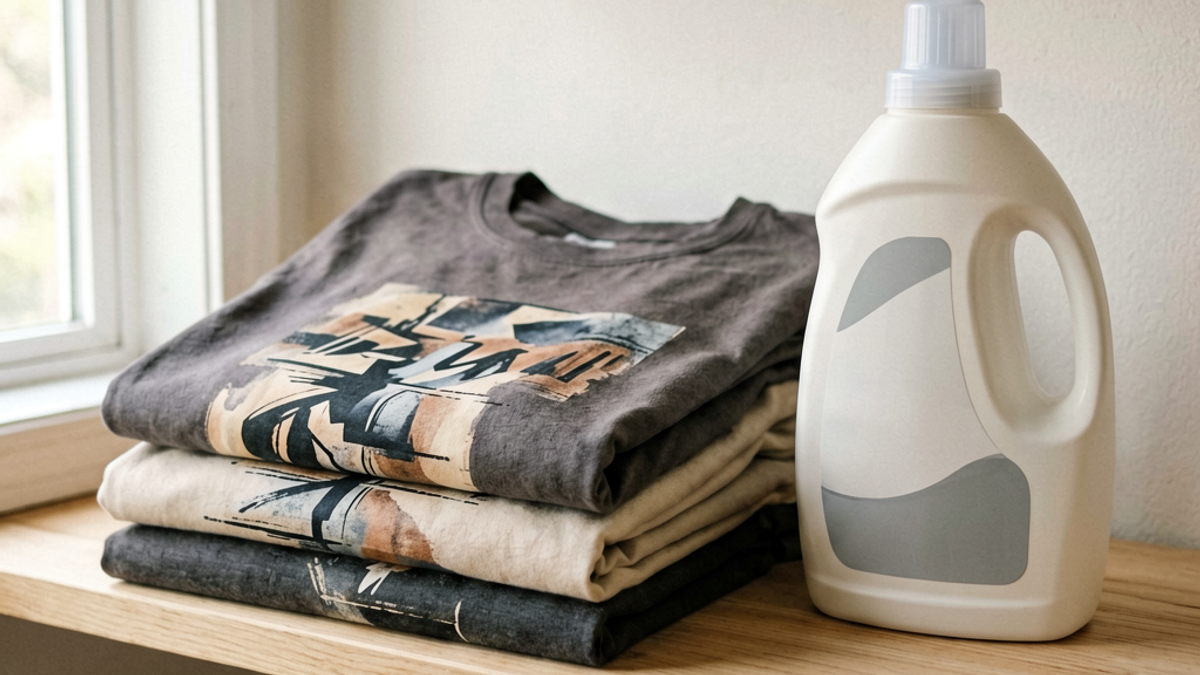
How Do You Wash and Care for Graphic Tees So Prints Don't Crack or Fade?
Wash graphic tees inside-out in cold water with a mild detergent, skip the dryer, and never iron directly on the print. That single sentence covers about 80% of what determines whether a printed...
Sylvie Vance
•
Wash graphic tees inside-out in cold water with a mild detergent, skip the dryer, and never iron directly on the print. That single sentence covers about 80% of what determines whether a printed tee lasts 10 wears or 100. The remaining 20% — water temperature, detergent type, drying method, storage, and how you handle stains — is the detail that separates a drawer of faded tees from a rotation that still looks new two years in.
The 30-Second Answer: How to Keep a Graphic Tee Looking New
A graphic tee fails for one of three reasons: the print cracks from heat and abrasion, the colors fade from UV and harsh detergent, or the cotton itself breaks down from over-drying. Every rule in this article is about avoiding one of those three failure modes. A $90 indie graphic tee treated like a $10 fast-fashion tee will end up looking like one by wash 20.
The four habits that matter most: turn the tee inside out, use cold water, air-dry or tumble-dry on low, and never put a hot iron directly on the print. The rest of this article is the detail behind those four rules plus the answers to the questions people ask once they start caring about their tees.
The Step-by-Step Routine (Pre-Treat, Wash, Dry, Store)
A real wash routine for graphic tees takes about three minutes of active effort. Most of the damage is happening in the dryer, which is where most of the discipline has to come in.
Pre-treat stains before washing. Apply a small amount of mild detergent or a dedicated stain remover directly to the stain, gently work it in with your finger, and let it sit for 5-10 minutes before the tee goes in the machine. Don't use bleach, even color-safe bleach, on a printed graphic — the oxidizing agents will lift the pigment out of the print within a few washes. For oil-based stains (food, sweat), a drop of dish soap works better than laundry detergent.
Turn the tee inside out before it goes in the machine. The print is the most exposed part of the garment in a normal wash cycle. Inside-out washing means the print is rubbing against itself, not against the rest of the load. This single habit extends print life by a factor of 2-3x. It's the highest-leverage thing you can do.
Use cold water and a mild detergent. Cold water (30°C / 86°F or below) is gentler on both cotton fibers and print pigments. Hot water opens the cotton fibers and lets pigment escape; it also sets in stains that should have been pre-treated. Mild liquid detergent is less aggressive than powder (which doesn't fully dissolve in cold water) and lower-sudsing, which means less mechanical stress on the print.
Air-dry or tumble-dry on low. The dryer is where most graphic tees die. High heat softens the ink, makes it sticky, and causes the cracking you see on vintage tees. Air-drying flat is the gold standard — lay the tee flat on a drying rack, reshape the collar and shoulders, and let it dry overnight. If you must use the dryer, tumble on low or delicate and pull the tee out while it's still slightly damp.
Store folded, not hung. A heavy graphic tee on a thin hanger will stretch at the shoulders and distort the collar over time. Fold it, stack it, and let the cotton rest.
Detergent and Water Temperature: What Actually Matters
Water temperature: cold is the only safe answer for graphic tees. Cold water (30°C / 86°F) cleans effectively for normal wear, preserves print pigment, and prevents the cotton shrinkage that warps the print. Warm water (40°C / 104°F) is acceptable for white-only tees with no print, but should be avoided for anything with a graphic. Hot water (60°C / 140°F) is a print killer.
Detergent type: use a mild liquid detergent, not a powder. Powder detergents don't fully dissolve in cold water, and the undissolved granules can scratch the print surface. Liquid detergents are also lower-sudsing, which means less mechanical stress on the print during the wash cycle.
Skip the fabric softener and the dryer sheets. Both work by coating fibers with a thin layer of waxy lubricant. On cotton, that's fine. On a screen-printed or DTG-printed graphic, the wax seeps into the print and accelerates the breakdown of the ink-to-fabric bond. This is the single most common cause of premature print failure on otherwise well-cared-for tees.
Woolite, Soak, or Eucalan for special tees. If you have a limited-edition or hand-pulled screen print, hand-washing in a no-rinse wool wash is the safest method. Cold water, gentle squeeze, no wringing, lay flat to dry. The extra 10 minutes is worth it for a $150+ collector piece.
Drying Mistakes That Destroy Prints
If you only change one habit after reading this article, change your drying habit. The dryer is responsible for more print failure than every other variable combined.
High heat is the number-one print killer. A standard dryer cycle runs at 60-70°C / 140-160°F. Plastisol screen-print ink softens at around 65°C / 150°F — a normal dryer cycle is literally at the threshold of melting the ink. Every high-heat cycle moves the ink closer to its softening point, where it sticks to other garments, picks up lint, and starts to crack when it cools. The cracking you see on old band tees is mostly dryer damage.
Tumble-dry on low or delicate if you must. A low-heat cycle runs at 40-50°C / 105-120°F, well below the ink softening point. The tee still gets dried, but the print stays intact. The trade-off is that low-heat cycles take longer and leave the tee slightly damp — pull it out before the cycle ends and hang or lay flat to finish.
Air-drying is the safest option. Lay the tee flat on a drying rack or hang it on a plastic hanger (not wire, which can rust and stain). Air-drying takes 4-8 hours depending on humidity and cotton weight; heavyweight tees can take 12+. The wait is worth it for a tee you want to keep for years.
Skip sunlight and skip the wringing. If you're air-drying outside, dry in the shade — UV exposure breaks down print pigment and a few hours of direct sun on a damp print can shift colors noticeably. And don't wring out a wet graphic tee: wringing twists the fibers and the print, causing distortion and cracking. Roll the tee in a clean towel and press instead.
Ironing and Steaming Safely (Without Melting the Print)
Never iron directly on a print. Direct contact between a hot iron soleplate and a plastisol or DTG print will soften the ink, transfer it to the iron, and permanently damage both. The minimum safe approach: turn the tee inside out and iron on the back side, where the print is on the opposite face of the cotton. This gets the wrinkles out without touching the print.
Use a press cloth for extra safety. A press cloth is a thin piece of cotton (an old pillowcase works) that you lay between the iron and the garment. It diffuses the heat and adds a second barrier between the iron and the print. This is what the streetwear brands in the Stryxen Studio collection recommend on their care labels.
Steamers are safer than irons. A handheld steamer never touches the print directly — it just delivers hot vapor that relaxes the cotton fibers. Hold the steamer 2-3 inches from the fabric, work from the inside out, and let the print dry before wearing. For heavily printed tees, skip the iron entirely — a steamer, a steamy bathroom, or just accepting the wrinkles is safer than hunting for a safe ironing angle.
Follow the care label. Some streetwear labels (especially limited drops) include 'do not iron' on the care label. Follow that instruction — the brand is telling you the print can't take direct or indirect heat, and ignoring the label voids any print-failure claim.
How Long a Well-Cared Graphic Tee Should Actually Last
There's a wide range of what 'well-cared' means, and an even wider range of how long a graphic tee can last. Here's the realistic expectation for each combination of print method and care discipline.
Screen print + excellent care: 100-300+ wears. A plastisol screen print on a heavyweight cotton tee, washed inside-out in cold water and air-dried, can survive 5-10 years of regular wearing. The tees from the Stryxen Studio collection are built to this spec — heavyweight cotton, plastisol ink, and explicit care instructions on the label.
Screen print + average care: 30-60 wears. This is what most people actually get. Washing in warm water, occasional tumble-dry on medium, no pre-treatment of stains. The print will start to show wear at high-friction points (collar, side seams, hem) by wash 20 and will be visibly aged by wash 40.
DTG print + excellent care: 30-50 wears. Even with perfect care, DTG prints fade faster than screen prints because the water-based ink bonds differently to the cotton fiber. A DTG tee that's been washed 30 times in cold water inside-out and air-dried will show 10-15% color loss.
Vinyl transfer (the cheapest print method): 5-15 wears regardless of care. Vinyl cracks and peels because it's a plastic film glued on top of the cotton, not bonded into the fiber. No wash routine fixes this — it's a print method with a built-in expiration date, and the only way to make a vinyl tee last longer is to wear it less, which defeats the point.
Key Takeaways
The four habits that matter most: turn the tee inside out, use cold water, air-dry or tumble-dry on low, never iron directly on the print. Skip any of these and the print will age noticeably within 20-30 wears.
Skip the fabric softener and dryer sheets. The wax coating they leave on the print is the most common cause of premature print failure on otherwise well-cared-for tees.
The dryer is the print's biggest enemy. High heat softens plastisol ink, accelerates DTG fade, and causes more print damage than every other variable combined. Air-dry flat, or tumble on low.
Match care discipline to the print method. Screen prints can survive 100+ wears with care; DTG prints fade after 30-50; vinyl transfers are done in 5-15 regardless. Buy and care accordingly.
The Bottom Line
A $90 indie graphic tee and a $20 mall graphic tee are made of the same cotton — what separates them after a year of wear is almost entirely how they're washed, dried, and stored. The labels in the Stryxen Studio collection publish tees that are built to last, and the care instructions on the label aren't aspirational. Follow them — cold wash, inside out, air-dry, no softener — and the tees will look new for years.
Frequently Asked Questions
Can you put a graphic tee in the dryer?
Yes, but only on low or delicate heat. A standard high-heat dryer cycle runs at 60-70°C / 140-160°F, which is at or above the softening point of plastisol screen-print ink. Every high-heat cycle moves the ink closer to cracking and peeling. Low heat (40-50°C / 105-120°F) is safe for screen prints and gentler on DTG prints. Air-drying flat is the safest option, but if you must use the dryer, low heat and pulling the tee out while slightly damp is the right compromise.
How do you wash graphic tees without the print cracking?
Three rules: turn the tee inside out, wash in cold water (30°C / 86°F or below), and skip the fabric softener. The inside-out habit reduces abrasion on the print by 60-80%. Cold water prevents the cotton fibers from opening and releasing pigment. Skipping fabric softener removes the waxy coating that breaks down the print-to-fabric bond. Together, these three habits extend print life by a factor of 2-3x compared to a normal wash routine.
Is it okay to iron a graphic tee?
Only on the reverse side, and only with a press cloth between the iron and the fabric. Direct contact between a hot iron soleplate and a print will soften the ink, transfer it to the iron, and permanently damage both. Turn the tee inside out, lay a thin cotton cloth (an old pillowcase works) over the print area, and iron on low. A handheld steamer is even safer because it never touches the print.
How long should a graphic tee last?
Depends on the print method and the care routine. A screen print on heavyweight cotton, washed inside-out in cold water and air-dried, can last 100-300+ wears — that's 5-10 years of regular wearing. The same tee washed in warm water and tumble-dried on high will start showing wear by wash 20 and be visibly aged by wash 40. DTG prints fade faster — 30-50 wears with excellent care, 15-25 with average care. Vinyl transfers are done in 5-15 wears regardless of how careful you are.
How Do You Wash and Care for Graphic Tees So Prints Don't Crack or Fad | Stryxen Studio Blog

 Sylvie Vance