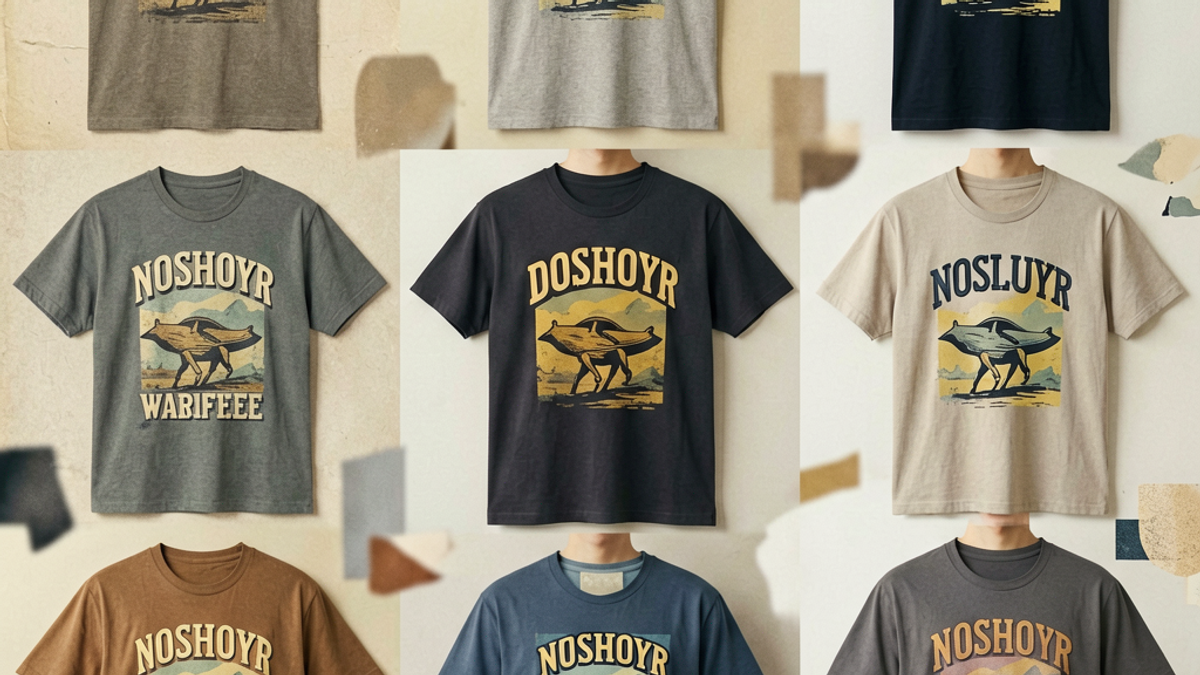
Graphic tees are still trending in 2026 because they're the cheapest, fastest canvas for personal style — and in a fashion economy that keeps raising prices on everything else, a printed cotton...
Sylvie Vance
•
Graphic tees are still trending in 2026 because they're the cheapest, fastest canvas for personal style — and in a fashion economy that keeps raising prices on everything else, a printed cotton tee is the last affordable rebellion. Every few years a new generation rediscovers the format, but the format itself never dies. The shirt is a billboard, a memoir, and a costume you can throw in a washing machine. That's the whole reason.
Direct Answer: The Cheapest Self-Expression With the Longest Shelf Life
The short version of the trend is this: when other forms of self-expression get expensive — runway fashion, vintage denim, designer sneakers — graphic tees remain the entry point. A $35-$45 printed tee gives you a graphic, a fit, and a wearable identity in one purchase. Nothing else in the closet does that for less.
Compare that to a pair of raw selvedge jeans (often $200+), a vintage band jacket (collectible, fragile, over $400 used), or even a clean pair of leather shoes. The tee wins on price-to-personality ratio every time, which is why Gen Z and younger millennials are leaning on graphics harder in 2026 than they did in 2022. It's the most accessible way to look like yourself on a budget.
The other side of the argument is shelf life. A plain white tee is interchangeable. A graphic tee carries a design, a reference, a mood — and that gives it memory. People keep graphic tees in rotation for years, sometimes decades. That longevity is rare in fast fashion, and it quietly explains why the category keeps surviving every cycle that was supposed to kill it.
Why Trends Keep Cycling Back to Graphics
Fashion trends don't move in straight lines — they spiral. Every 7-10 years, a silhouette or motif that felt tired gets rediscovered as fresh because the audience that made it mainstream is old enough to feel nostalgic, and the audience seeing it for the first time is young enough to feel original. Graphic tees are a textbook case.
In the mid-2010s it was band tees and Tumblr-typography ironic prints. In the early 2020s it was Y2K rhinestones, oversized fits, and bootleg luxury spoofs. In 2026 the cycle is leaning toward 1990s skate art, anime nostalgia, and AI-generated one-offs — but underneath, the mechanic is identical: a generation claims a visual vocabulary that older shoppers had retired.
Three structural reasons keep the cycle spinning:
Low cost of reproduction. DTG (direct-to-garment) printing and small-batch screen runs mean a brand can test 20 designs before committing to 200. Failed experiments are cheap, so the pace of new graphics never slows down.
Short memory of design. A graphic from 2014 looks dated. A graphic from 2025 looks current. This forces constant turnover, which keeps the category visible on social feeds even when no individual shirt has cultural weight.
Influencer and drop culture. Drops create scarcity windows. A limited graphic tee is a 72-hour event, not a product launch. That artificial urgency is built for TikTok and Instagram, which is where trend cycles now originate.
The 2026 Forces Driving the Trend
If you zoom in on what's actually moving the needle this year, three forces stand out. None of them are new, but all three are operating at higher intensity than they did even two years ago.
AI Art as a Design Engine
Generative tools have made graphic design almost free at the prototyping stage. Small streetwear labels — Stryxen Studio among them — can spin up 50 visual concepts in an afternoon, then keep the strongest two. The downstream effect is that the volume of bold, original graphics in the market has roughly doubled since 2023, and shoppers are responding to the wider selection. Boring repeats are easier to skip when there's always something weirder one tab over.
Nostalgia as a Pricing Hack
Vintage tees from the 1990s and early 2000s now regularly sell for $150-$400 on resale platforms. That's absurd for a printed t-shirt, but it sets a cultural anchor. A new graphic tee at $40 feels like a bargain by comparison, which is the comparison shoppers are actually making. The vintage market didn't kill graphic tees — it made the new ones look cheap in a good way.
Drops, Collabs, and Hype Calendars
The streetwear playbook — small drops, artist collabs, restock alerts — is now mainstream. Even non-streetwear brands run weekly graphic releases because the model works. The result: graphic tees have become a calendar product, not a closet staple. You buy them in waves, you wear them for a season, and you wait for the next drop. That rhythm keeps the trend self-perpetuating.
Generational Shifts in How Tees Are Worn
The way a graphic tee is styled in 2026 looks different from how it was worn in 2016, and that styling shift is part of why the trend keeps reading as 'new.'
Older millennials still default to the band tee + jeans + sneakers formula, and there's nothing wrong with it. Gen Z, though, has effectively rebuilt the graphic tee as a layering piece: thrown over a long-sleeve thermal in fall, under an open flannel in winter, or cropped and paired with low-rise cargos. The shirt is no longer the loudest thing in the outfit — it's often the quietest, and the rest of the fit does the talking.
There's also a gender-blur happening. Unisex oversized fits have been the default in indie streetwear for years, but in 2026 even legacy retailers are selling the same graphic tees across men's and women's cuts in identical sizing. That removes a whole layer of shopping friction, which means more people buy them, which means more people wear them, which means more trend momentum.
A subtler shift: graphics are getting smaller. The loud center-chest print is no longer the only option. Left-chest logos, back-yoke prints, and tonal-on-tonal graphics are having a moment because they read as more grown-up and easier to style into a work-adjacent fit. This is graphic tees quietly entering a new life stage — not just for weekends.
Where the Trend Is Heading Next
Predictions in streetwear are usually wrong by 6-12 months, but the directional signals for late 2026 and into 2027 are visible if you know what to look for.
First, more artwork, less logo. Branded big-logo tees are cooling. The next wave is illustration, hand-drawn type, and photography prints — anything that feels made by a person rather than stamped by a corporation. This is good news for small labels that invest in art direction.
Second, sustainability as a design choice, not a footnote. Recycled cotton and water-based inks are becoming the default at the mid-tier. Shoppers under 25 now check the materials label before they check the graphic. Brands that don't disclose fiber sourcing will start to feel dated within 12-18 months.
Third, the slow death of the basic tee as the default. The plain white and black tee are losing ground to graphics that aren't even graphics in the traditional sense — abstract textures, fake-vintage washes, and trompe-l'œil prints that look like they were ripped from a 1970s album cover. The 'plain' option is being replaced by the 'almost-plain' option, which is a clever way to keep the format feeling fresh.
None of this means graphic tees are about to peak and collapse. They've been declared dead at least four times in the last 20 years, and the obituaries have all been wrong. The format is too flexible, too cheap, and too tied to identity to ever fully go away. What changes is the surface — the art, the cuts, the cultural references layered on top — not the underlying product.
Key Takeaways
Graphic tees survive because they're the lowest-friction way to express identity through clothing, and that value doesn't go away when other fashion categories get expensive.
Trend cycles hit graphics every 7-10 years, driven by nostalgia, low reproduction cost, and the rise of drops as a sales model.
In 2026, three forces are pushing the trend forward: AI-generated design volume, vintage resale pricing psychology, and hype-driven drop calendars.
Wearing has changed — smaller prints, layering, gender-neutral fits, and work-adjacent styling are all extending the life of the category.
The next phase favors artwork over logos, sustainable materials, and 'almost-plain' designs that read as elevated basics.
The Bottom Line
Graphic tees aren't trending in 2026 because fashion forgot to cancel them. They're trending because the format continues to solve a real problem: most people want to look like themselves without spending a week's rent on a single outfit, and a well-chosen graphic tee does that in one move. Every other trend in your closet — the wide-leg pants, the loafers, the technical outerwear — is a supporting actor. The tee is the line of dialogue that actually says something.
If you're building a rotation that holds up across seasons, start with two or three graphics that you genuinely want to be seen in, and build everything else around them. The Stryxen Studio collection leans into this exact idea: art-forward prints, fits that layer cleanly, and price points that keep the format accessible. That's the whole formula, and it's why the category is still here.
Frequently Asked Questions
Are graphic tees still cool in 2026?
Yes — graphic tees are still a dominant casual category in 2026, especially in streetwear and indie labels. The trend has shifted toward smaller, more art-driven prints and unisex oversized fits, but the format itself is stronger than it was five years ago, not weaker.
Why do graphic tees go in and out of style?
Fashion trends follow 7-10 year nostalgia cycles, and graphic tees sit at the center of those cycles because they carry cultural references. A 2014 ironic-print tee looks dated in 2026, but a 1990s skate graphic feels fresh again. The format keeps resetting its surface design while the underlying product stays the same.
What kind of graphic tees are trending in 2026?
The dominant styles in 2026 are 1990s skate art, anime-inspired illustrations, AI-generated one-offs, and tonal-on-tonal designs. Oversized and boxy fits are still the default, but smaller left-chest prints and back-yoke graphics are growing fast as people look for versatile, work-adjacent options.
How much should a good graphic tee cost?
For a new mid-tier streetwear graphic tee, $30-$50 is the realistic range in 2026. Below $20 the print quality and fabric weight usually suffer, and above $80 you're paying for hype or a collab premium rather than materials. Vintage and resale prices can run much higher depending on rarity.
Free Shipping on All OrdersFree ReturnsNo Hidden Fees
 Sylvie Vance