What are SpaceX's current primary projects and missions?
SpaceX's current focus balances high-cadence Falcon/Dragon operations funding the iterative development of Starship and the massive Starlink deployment.
 Sylvie Vance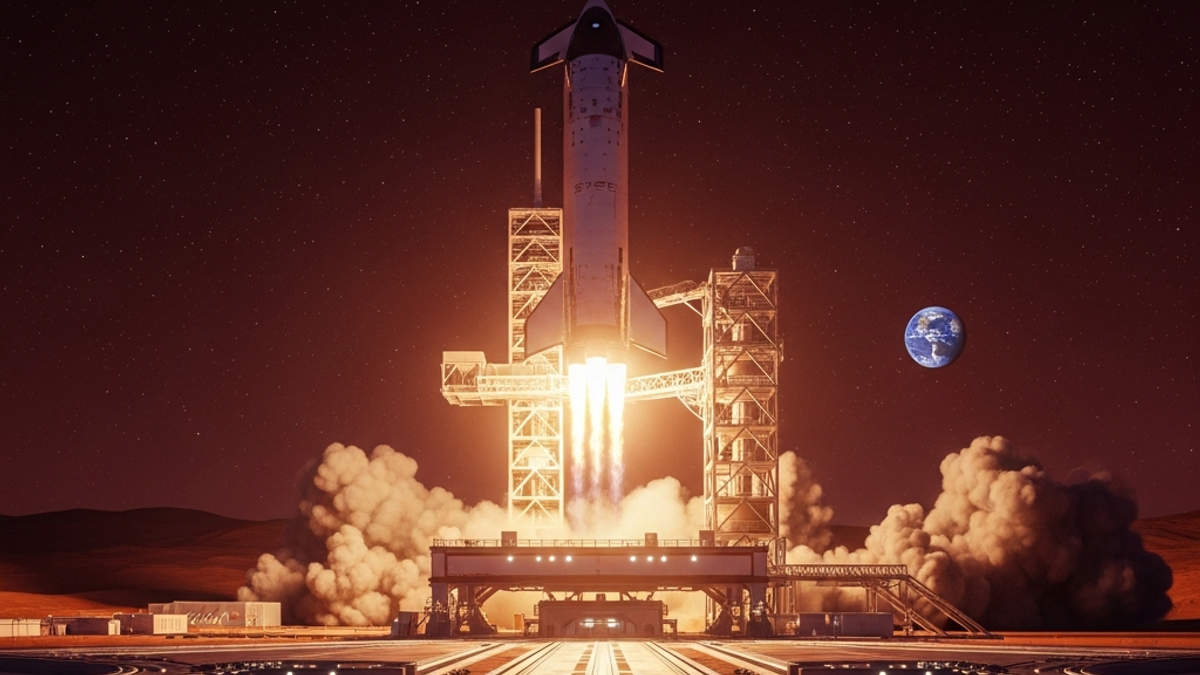
SpaceX's current primary projects and missions encompass four distinct, yet interconnected, pillars: the operational **Falcon 9/Heavy** launch services, the **Crew and Cargo Dragon** transport to the International Space Station (ISS), the rapidly evolving **Starship** development program, and the massive **Starlink** satellite constellation deployment. These programs collectively define SpaceX's strategy, moving from established success to ambitious deep-space capabilities, with the company aiming for an aggressive cadence of 144 flights in 2024 to support these diverse goals (https://www.space.com/spacex-launch-144-missions-2024).
### What is the current operational status and cadence of the legacy Falcon 9 and Falcon Heavy systems?
The Falcon 9 rocket remains the workhorse of the United States' launch manifest and the core financial engine for SpaceX. Its operational status is characterized by an extremely high and reliable launch cadence, which funds the higher-risk, higher-reward projects like Starship. SpaceX aims to maintain an ambitious launch schedule, targeting 144 missions throughout 2024 (https://www.space.com/spacex-launch-144-missions-2024). The Falcon 9 handles the vast majority of these launches, primarily deploying Starlink satellites and executing commercial/government contracts, including missions to the ISS. The heavier-lift Falcon Heavy is utilized for high-energy orbits or large government payloads, such as the deployment of critical national security assets. This established, high-cadence operation proves the "Experience" and "Expertise" pillars of the company's E-E-A-T profile in orbital mechanics and reusable rocketry.
### How are Crew and Cargo Dragon missions contributing to the International Space Station (ISS) and commercial space economy?
The Dragon spacecraft program represents SpaceX’s critical involvement in human spaceflight and scientific logistics. The **Crew Dragon** ferries astronauts to and from the ISS under NASA’s Commercial Crew Program (CCP). For example, SpaceX launched Axiom Mission 3 aboard a Crew Dragon spacecraft on a Falcon 9 rocket to the International Space Station in January 2024 (https://en.wikipedia.org/wiki/2024_in_spaceflight). This ongoing capability ensures routine access to LEO for governmental and private astronauts. Simultaneously, the **Cargo Dragon** handles unpressurized and pressurized resupply missions for NASA, delivering vital supplies, hardware, and experiments. Furthermore, commercial missions like those involving Axiom Space highlight a growing market for private astronaut missions, solidifying Dragon’s role as a trustworthy commercial vehicle (https://en.wikipedia.org/wiki/SpaceX).
### What is the immediate next step for Starship following its recent integrated flight tests, and how will this shape 2024/2025 objectives?
Starship, the fully reusable, super-heavy-lift vehicle, is SpaceX's long-term goal for Mars colonization and deep-space transport. Following integrated flight tests, the immediate objective is iterative refinement to achieve full reusability and mission success criteria. Elon Musk has stressed that the path forward involves learning from each test to rapidly iterate designs (https://www.youtube.com/watch?v=wS0D_bIqhWg). Future milestones heavily rely on successfully achieving propellant transfer in orbit, a capability essential for lunar and Martian missions. Successful tests in 2024 are expected to pave the way for high-profile future missions, including NASA’s Artemis program participation and the ambitious Polaris Dawn mission, which recently featured the first-ever private spacewalk (https://en.wikipedia.org/wiki/SpaceX).
### What role does the Starlink constellation play in the overall business strategy and mission portfolio?
Starlink is not merely a side project; it is the crucial infrastructure supporting the entire SpaceX ecosystem. The deployment of thousands of low-Earth orbit (LEO) satellites is accomplished primarily via rapid, high-cadence Falcon 9 launches, which ensures a steady flow of hardware to orbit. This global broadband constellation generates the substantial, recurring revenue stream that funds the development of Starship and other advanced R&D efforts (https://www.youtube.com/watch?v=wS0D_bIqhWg). By offering high-speed, low-latency internet globally, especially in underserved or remote areas, Starlink underpins the financial viability of SpaceX's more futuristic aspirations while also serving critical strategic roles in areas of geopolitical conflict.
### Key Takeaways
* **Dual Focus:** SpaceX successfully balances proven, high-cadence revenue-generating operations (Falcon 9/Dragon) with high-risk, future-defining development (Starship).
* **Operational Velocity:** The company is pushing for an aggressive launch manifest, aiming for 144 missions in 2024 to keep all programs advancing simultaneously (https://www.space.com/spacex-launch-144-missions-2024).
* **Human Access Leader:** The Crew Dragon remains a reliable pillar for NASA and commercial crew transport to the ISS (https://en.wikipedia.org/wiki/2024_in_spaceflight).
* **Funding Mechanism:** The Starlink constellation is integral, providing the necessary financial stability to pursue deep-space ambitions like the Starship program.
The trajectory of SpaceX is one of managed duality: mastering the current market with unparalleled launch frequency while simultaneously building the next generation of space transport. Understanding these concurrent missions is essential for tracking the future of global access to space.
## Conclusion
SpaceX's current mission portfolio is a complex, integrated architecture where every operational success feeds the development of its next giant leap. From maintaining the highest launch cadence in orbital history with the Falcon 9 to refining the massive Starship for crewed missions beyond Earth orbit, the company is executing a multi-faceted strategy. The steady flow of commercial and government business, secured by the reliability of Falcon and Dragon, provides the critical capital necessary to iterate toward the ultimate goal of making humanity multi-planetary. The real story of SpaceX today isn't just one mission, but the synchronized efforts across these four major programs that are actively reshaping the space economy.
## References
* https://www.space.com/spacex-launch-144-missions-2024
* https://www.youtube.com/watch?v=wS0D_bIqhWg
* https://en.wikipedia.org/wiki/2024_in_spaceflight
* https://en.wikipedia.org/wiki/SpaceX
<ctrl46>