Perseid Meteor Shower 2026: Why the Astronomy Graphic Tee Is the Surprise Streetwear Drop of the Summer
On July 17, 2026 the BBC, San Francisco Chronicle, and KTLA all began their 2026 Perseid meteor shower coverage the same week, and a quiet micro-trend is riding the celestial calendar:...
Sylvie Vance
•
On July 17, 2026 the BBC, San Francisco Chronicle, and KTLA all began their 2026 Perseid meteor shower coverage the same week, and a quiet micro-trend is riding the celestial calendar: astronomy-themed graphic tees are the surprise limited drop of summer 2026. The Perseids peak overnight August 12–13, 2026, but lead-in apparel drops ship now. Below is what the coverage flagged, why the prints work, and how to wear the look to a viewing night without costume energy.
What the BBC, SF Chronicle, and KTLA Actually Flagged About the 2026 Perseids
BBC News ran a how-and-when-to-watch guide on July 17, 2026, noting that the 2026 Perseid peak falls in the pre-dawn hours of August 12 and 13 across the Northern Hemisphere, with viewers in dark-sky locations able to see upward of 60 meteors per hour at the peak. The same day, the San Francisco Chronicle published a California-specific viewing conditions piece, and KTLA in Los Angeles ran a Southern California viewing-times guide. Three outlets, one story, and the same window — the kind of concentrated media wave that streetwear labels watch for when planning a themed drop.
What makes 2026 slightly different from prior Perseid seasons is that the media wave is starting earlier. Astronomy outlets usually begin heavy Perseid coverage the week of the peak; in 2026, lifestyle and regional newspapers are running viewing guides a full month ahead. That timing matters for streetwear because it gives a themed graphic-tee drop a longer runway: a label that ships a Perseids capsule on July 25 has three weeks of natural media tailwind before the peak, which is unusually long for a single-event drop in streetwear.
Stryxen readers should think of the Perseids the way they think of the Subway Series or a major concert tour — a calendar event with a built-in outfit moment, and a reason to buy a graphic tee that you will actually wear outside of the event itself. The right astronomy tee reads as streetwear first and as merch second.
Why Astronomy-Themed Graphic Tees Are the Surprise Summer 2026 Drop
Astronomy prints have been quietly gaining ground on US streetwear racks for two seasons. Three forces explain the move into the mainstream in 2026.
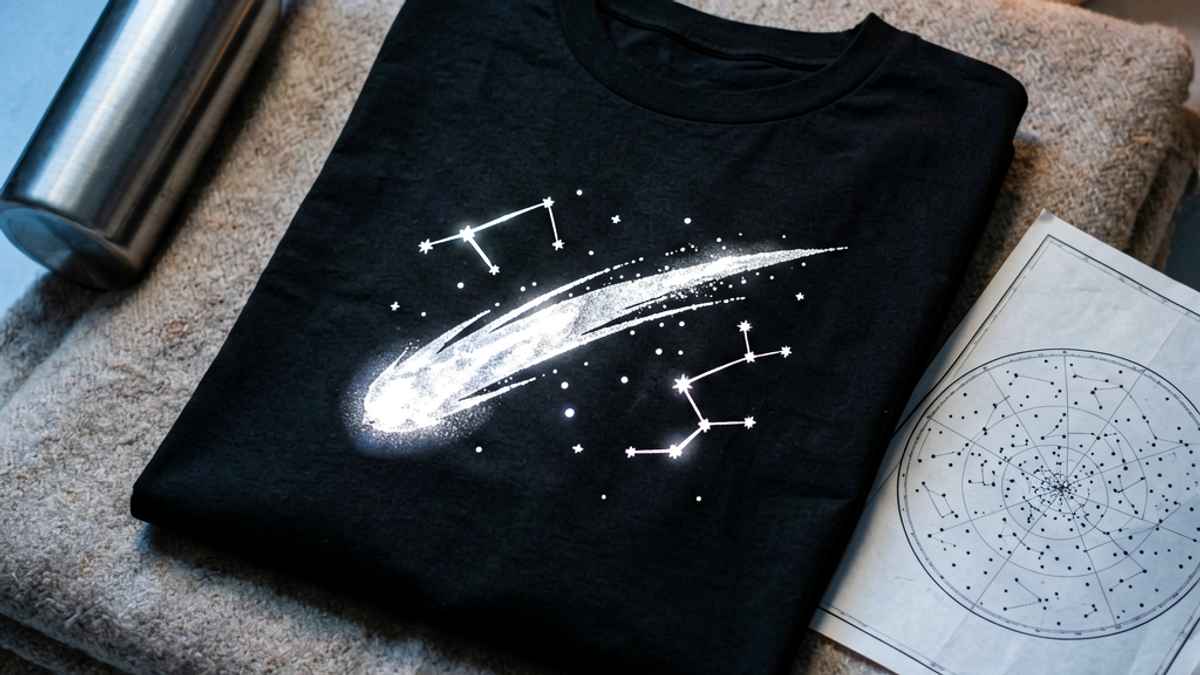
Celestial prints photograph well on dark blanks. A meteor shower on a navy or black heavyweight tee is one of the few graphic treatments that holds up in low-light social media — the bright white and metallic silver ink catches a flash or streetlight in a way that a flat-color graphic does not. That is a real advantage for buyers who care about how the tee looks on a phone screen.
The motif is culture-neutral. A constellation, a meteor, or a rendered night-sky scene does not require the buyer to share a specific subculture's references. That makes astronomy tees easier to gift, easier to layer into an existing wardrobe, and easier to wear into settings (an office, a casual dinner) where a louder graphic would feel out of place.
The calendar moment is real, not manufactured. Unlike a brand-driven drop day, the Perseids actually happen on a fixed astronomical date. That gives a themed tee a reason to exist beyond hype, which is the same structural advantage baseball graphic tees have had since the early Subway Series collabs: the print is rooted in a real-world event, so the buyer has a story to tell when wearing it.
The result is that 2026 summer drops are heavier on celestial vocabulary than any year since the early 2010s planetarium-tee revival. Independent labels in Los Angeles, Brooklyn, and Austin are leading the volume, with a few larger streetwear names running limited meteor-shower capsules timed to the August peak.
Which Perseids Prints, Palettes, and Silhouettes Actually Work for Streetwear
Not every astronomy-themed tee on the 2026 market is worth buying. Four filters separate the wearable pieces from the ones that read as merch.
Print scale. A single, well-placed meteor streak or a tight constellation cluster reads as intentional. A full-front mural of the Milky Way reads as a costume. The rule is the same one that holds for band tees: the graphic should sit at chest height on one side, not run edge to edge across the body.
Palette discipline. The strongest 2026 Perseids pieces stick to two colors of ink on a dark base — typically white plus one accent (silver, icy blue, or a soft warm yellow). Multi-color cosmic prints tend to muddy under low light and lose the contrast that makes the motif work.
Fabric weight. A 7 oz to 9 oz heavyweight cotton is the sweet spot. Lighter blanks let the metallic inks crack faster in the wash, which kills the look within a season. Heavier blanks also hold the drape that makes an oversized astronomy tee read as intentional rather than slouchy.
Back print and tagging. A small back print, a woven label at the neck, and a hem tag are the production details that move a tee from novelty to collectible. Labels that skip those details are signaling they expect the buyer to wear the tee once, not to keep it for years.
If a 2026 Perseids piece clears all four filters, it is a buy. If it fails two or more, it is the kind of tee that ends up at the bottom of a drawer by August 20.
How to Wear an Astronomy Graphic Tee to a Viewing Night Without Looking Like a Costume
A viewing night is the home turf of a celestial graphic tee, but it is also the setting where the look is most likely to tip into costume. The fix is restraint: let the print be the only loud piece on the body and anchor everything else around it.
For an August evening on a rooftop, a hill, or a coastal pull-off, anchor a navy or black Perseids tee with raw selvedge denim or a plain wide-leg trouser, a low-top sneaker, and one layer for after-dark temperatures — an open flannel, a chore coat, or a light overshirt. Skip the cargo, skip the chunky sneaker, and skip any other graphic or logo on the body. Two loud pieces in one outfit is the line; three is merch.
Sizing matters more for an astronomy tee than for a louder graphic. Because the print is mostly white or metallic on a dark base, a too-big fit reads as a pajama top. The shoulder seam should sit at the edge of the shoulder, the sleeve should end around the mid-bicep, and the hem should land just below the belt. If you want an oversized drape, size up once — but make sure the shoulder still sits correctly, because a dropped shoulder on a celestial print reads as fast fashion.
When the Celestial-Tee Look Does Not Work (and What to Wear Instead
An astronomy graphic tee is not a universal piece. Three settings where it underperforms, and a substitute for each.
Formal or business-casual settings. A celestial print is too loud for an office that does not already tolerate graphic tees. Substitute: a plain heavyweight tee in navy or black, or a fine-gauge knit. Save the meteor print for the weekend.
Daytime city heat, no evening event. A heavy dark tee with metallic ink absorbs sun and reads heavier than the temperature warrants. Substitute: a lighter-weight celestial print on a stone or cream base, or a sleeveless cut from the same brand if offered.
Layering under a busy outerwear piece. If the jacket is already a statement (a bold chore coat, a loud plaid overshirt), the astronomy print fights it. Substitute: a plain tee under the busy layer, and save the celestial piece for a quieter jacket or no jacket at all.
Used in the right setting, a 2026 Perseids graphic tee is one of the more wearable limited drops of the summer. Used in the wrong setting, it is the same problem as any themed graphic: the print does the work for one event, then sits in the drawer.
Frequently Asked Questions
When exactly is the 2026 Perseid meteor shower peak?
Per BBC, SF Chronicle, and KTLA coverage from July 17, 2026, the 2026 Perseids peak overnight on the nights of August 12 and 13, with the strongest viewing window in the pre-dawn hours. Viewers in dark-sky locations can expect up to 60 meteors per hour at the peak. Activity ramps up gradually from late July and tapers through late August, so any clear night in that window will show at least a few meteors.
Are there streetwear graphic tee drops tied to the 2026 Perseids?
Yes. Multiple US streetwear labels — primarily in Los Angeles, Brooklyn, and Austin — are releasing limited Perseids-themed graphic-tee capsules between late July and early August 2026, timed to ride the media wave into the August 12–13 peak. Drops are typically small-batch (200 to 500 units) and use heavyweight cotton with white plus metallic silver ink. The Stryxen newsletter and collection page will flag any capsule that fits the brand's print vocabulary.
What should I wear to a Perseids viewing night?
Anchor a navy or black Perseids graphic tee with raw selvedge denim or a plain wide-leg trouser, a low-top sneaker, and one light layer for after-dark temperatures — an open flannel, a chore coat, or a light overshirt. Skip cargo, skip chunky sneakers, and skip any other graphic on the body. Bring a blanket for sitting and a thermos for warmth; the print is the only loud element you need on the outfit itself.
Will a 2026 Perseids graphic tee still be wearable after the peak?
Yes, if you buy the right piece. A two-color heavyweight tee with a single constellation or meteor print reads as a normal dark graphic tee once the calendar event passes — it does not have a date stamp on it like a tour shirt would. The pieces to skip are the ones that print the year (2026) or the specific peak date on the body; those read as memorabilia by September and are hard to restyle into a normal rotation.
Free Shipping on All OrdersFree ReturnsNo Hidden Fees
 Sylvie Vance