Oversized Tee vs Regular Fit Tee: Which Silhouette Suits You?
The right silhouette for you is the one that flatters your frame and matches the print scale on the tee — and that usually means regular fit for small chest prints and slim frames, oversized fit...
 Sylvie Vance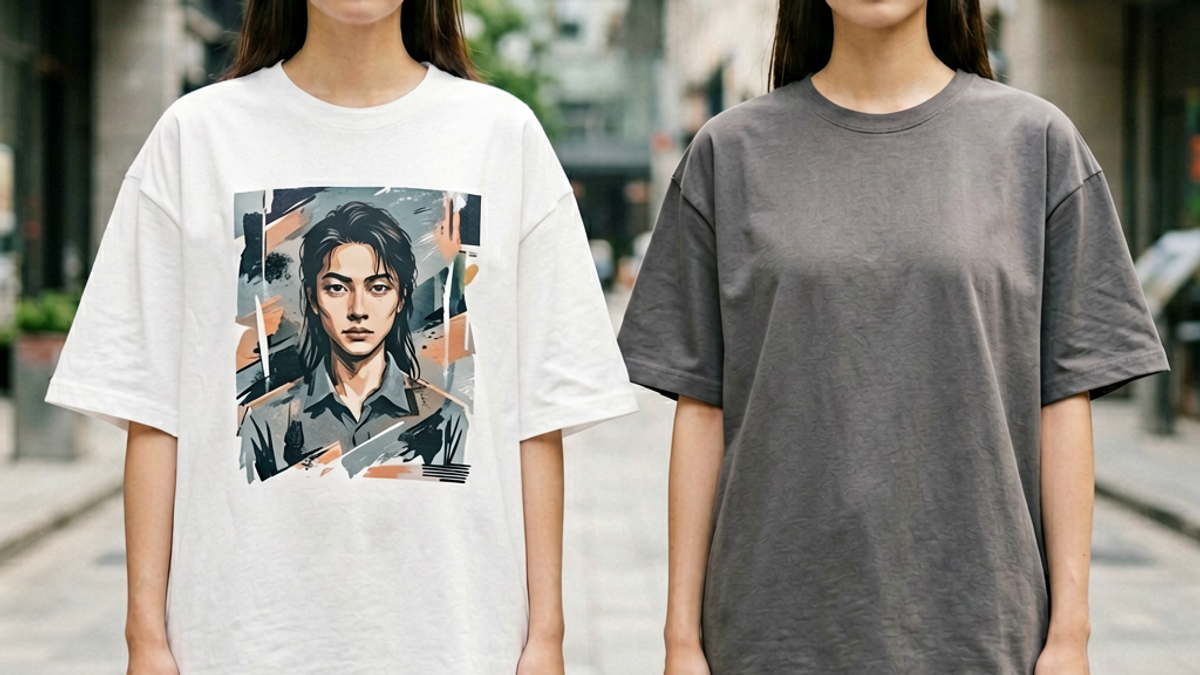
The right silhouette for you is the one that flatters your frame and matches the print scale on the tee — and that usually means regular fit for small chest prints and slim frames, oversized fit for back prints and taller frames. Neither silhouette is universally better. Regular fit is the safer default that works with most graphics and most bodies; oversized is a deliberate choice that requires print design, layering, and confidence. Pick the silhouette that matches the tee you're buying, not the silhouette that's trending this season.
Key Takeaways
Regular fit is the safe default — works with most graphics, frames, and occasions.
Oversized fit is a deliberate choice — requires print design and styling that match the silhouette.
Match silhouette to print scale — small prints need closer fits, large prints need more room.
Frame matters more than height — broad-shouldered buyers can carry oversized; shorter frames usually shouldn't.
The trend cycle favors oversized right now — but that doesn't make it right for every buyer.
What Regular Fit Actually Means
Regular fit tees sit close to the body without being tight — the shoulder seam lands at the edge of the shoulder bone, sleeves hit mid-bicep, the body skims the torso without clinging, and the hem drops 2–4 inches below the belt. It's the silhouette that defined t-shirts from the 1950s through the early 2010s, before the streetwear shift toward oversized became the default. Most "classic" graphic tees from brands like Stüssy, Uniqlo, and most vintage repro labels are cut this way.
Regular fit works because it doesn't fight your frame. The tee reads as a shirt, not as a silhouette statement. That makes it the safe choice for buyers who want their graphic tee to do the visual work without also announcing a fit opinion. It also layers cleanly under jackets and overshirts without bunching, which makes regular fit the right call for buyers who treat tees as foundation pieces.
What Oversized Fit Actually Means
Oversized tees drop the shoulder seam 1–3 inches down the arm, extend the body length 2–4 inches past the belt, widen the chest by 4–8 inches, and often widen the sleeves proportionally. The silhouette is intentionally slouchy — the tee should look like it's wearing the buyer, not the other way around. Most modern streetwear graphic tees are cut this way, especially those designed for full-front or back prints that need the surface area to read correctly.
Oversized fit is a louder choice than most buyers realize. It signals awareness of the silhouette trend and a deliberate fit opinion. It also requires more styling work — an oversized tee with regular pants looks proportionally off, while an oversized tee with wide-leg pants or shorts looks intentional. The silhouette is also less forgiving across body types; frames shorter than 5'7" or narrower than 38" chest often look swallowed rather than relaxed.
Frame, Height, and the Right Match
The silhouette choice should start with frame, not trend. Slim builds (chest under 38", waist under 30") almost always look better in regular fit. Oversized swallows the torso and makes proportions look junior. Average builds (chest 38–42", waist 30–34") can carry either, with the choice driven by the print and styling rather than the body. Broader or taller frames (chest 42"+, height 6'0"+) usually look better in oversized, because the silhouette scales with the frame.
Height matters less than torso length. A 5'8" buyer with a long torso can carry an oversized tee; a 5'10" buyer with a short torso will look swamped. The honest test: try the tee on with the pants you actually wear, stand in front of a full-length mirror, and check whether the hem-to-crotch ratio looks right. If the tee ends mid-thigh and your pants hit at the same spot, the proportions are working.
Matching Silhouette to Print
Print scale and silhouette have to match, or the tee looks wrong regardless of fit. Small chest prints (left-chest hits, 3–4 inch logos) need a closer fit — regular or tailored — so the print sits where it's designed to. On an oversized tee, a small chest print floats awkwardly on the loose fabric. Large back prints (10+ inch graphics, wraparound designs) need the surface area of an oversized tee — on a regular fit, the print crowds or gets cut off at the seams. Full-front prints can work on either, but look more deliberate on oversized.
When a brand designs a graphic specifically for one silhouette, the product page will usually say so — "designed for an oversized fit" or "runs true to size, classic cut." Listen to that note. The same graphic printed on a regular-fit blank and an oversized-fit blank looks like two different designs, and the brand chose the cut for a reason.
Common Mistakes
Three mistakes cause most oversized-vs-regular fit disasters. Buying oversized in your regular size — many brands already cut their tees oversized, so buying "large" in a brand that runs large gives you an extreme silhouette you didn't expect. Mixing silhouettes randomly — oversized tee with tailored trousers, regular fit tee with extremely wide pants, both look like accidents. Ignoring the design intent — a tee designed for an oversized fit and worn as regular looks like it shrank in the wash; a tee designed for regular fit and worn oversized looks like it belonged to someone else.
The Styling Mistake Most Buyers Make
The most common oversized-vs-regular-fit mistake is choosing the silhouette based on the current trend cycle rather than the frame or the print. In 2026, oversized is dominant in streetwear marketing, which pushes buyers toward silhouettes that don't actually flatter their frame. The result is a closet full of tees that look "right" in product photos and "off" in the mirror. The fix is to ignore the trend signal and choose based on frame and print scale.
The second most common mistake is mixing silhouettes randomly within an outfit. An oversized tee with tailored pants looks unbalanced; a regular-fit tee with extremely wide pants looks disproportionate; a tailored tee with relaxed pants looks intentional. The mix has to be deliberate. Most buyers don't think about silhouette as a system, only as individual choices — which is why their outfits often look like they're fighting themselves.
The third mistake is ignoring the print's intended silhouette. Brands design graphics for specific cuts. A small chest print is usually designed for a regular or tailored fit, where the print sits where the designer placed it. The same print on an oversized blank floats awkwardly; on a very tailored blank, it crowds the chest. The product page usually tells you the intended fit — listen to it.
The honest path is to identify which silhouette actually flatters your frame and which prints you actually want to wear, then buy within those constraints. The trend will rotate in two years; the silhouette that flatters your body and the prints you love will stay valid for the duration of the rotation. Buy for the long window, not the current moment.
The Role of Layering in Silhouette Choice
Layering changes the silhouette math. An oversized tee worn alone reads as oversized; the same oversized tee under a structured denim jacket reads as a regular-fit foundation layer. Buyers who want flexibility across silhouettes should think about layering from the start. If you wear heavy outerwear most of the year, a regular-fit tee works under almost any layer. If you wear light or no outerwear, the tee's standalone silhouette matters more, and oversized becomes a more defensible choice.
Climate also affects the silhouette calculus. In hot, dry climates, oversized tees breathe better and feel more comfortable — the silhouette is a practical choice as much as a style one. In cold climates, oversized tees get bulky under outerwear; regular-fit or slightly relaxed tees layer more cleanly under coats and jackets. The right silhouette depends partly on what you'll be wearing over it for most of the year.
For most buyers, a working rotation includes one or two of each silhouette rather than committing exclusively to one. A regular-fit black tee for layering, an oversized graphic-front tee for standalone warm-weather wear, and a tailored mid-weight piece for slightly more polished contexts cover most needs without overcommitting to any single silhouette. The diversity in the rotation matches the diversity in real-life outfits.
The Bottom Line
Regular fit and oversized fit are both correct answers to different questions. Regular fit is the safe, versatile default — works with most prints, frames, and outfits. Oversized is the deliberate silhouette choice — works when the print is designed for it, the frame can carry it, and the rest of the outfit is built to match. Pick based on frame and print, not trend. For buyers building a working rotation across both silhouettes, the Stryxen Studio collection includes cuts designed for each — regular fit for the smaller graphic drops, oversized for the back-print pieces.
Frequently Asked Questions
Should I wear oversized or regular fit tees?
Pick based on frame and print scale, not trend. Slim builds (chest under 38") usually look better in regular fit. Broader or taller frames can carry oversized. Small chest prints need closer fits; large back prints need the surface area of oversized.
Is oversized fit just a trend?
Partly, but it's also a legitimate silhouette shift driven by modern graphic tee design — back prints and full-front graphics genuinely need more surface area to read correctly. The trend will likely soften in a few years, but oversized isn't going away because the print design has adapted to it.
Do oversized tees look sloppy?
Only when the rest of the outfit doesn't match. An oversized tee with slim or tailored pants looks unbalanced; an oversized tee with wide-leg pants or shorts looks deliberate. The silhouette requires more styling work than regular fit, but it isn't sloppy by default.
Should graphic tees be tight or loose?
Match the silhouette to the print. Small chest prints need tailored or regular fits. Large back or full-front prints need oversized or relaxed fits. Putting a small print on an oversized tee, or a large print on a regular fit tee, both look wrong.