Oversized Tee vs Regular Fit Tee: Which Silhouette Suits You?
An oversized graphic tee is a streetwear statement with dropped shoulders, extended length and 2–4 inches of extra room through the body, while a regular fit tee sits at the shoulder seam, ends at...
Sylvie Vance
•
An oversized graphic tee is a streetwear statement with dropped shoulders, extended length and 2–4 inches of extra room through the body, while a regular fit tee sits at the shoulder seam, ends at the hip and follows your torso without fabric pooling. Oversized wins when you want volume, layering room and a 2026 runway-coded silhouette. Regular fit wins when you want versatility, a clean line under jackets and a shape that flatters most body types without styling work. The right pick depends on the look you’re building, not which is “better.”
Direct answer: oversized = statement, regular = safe
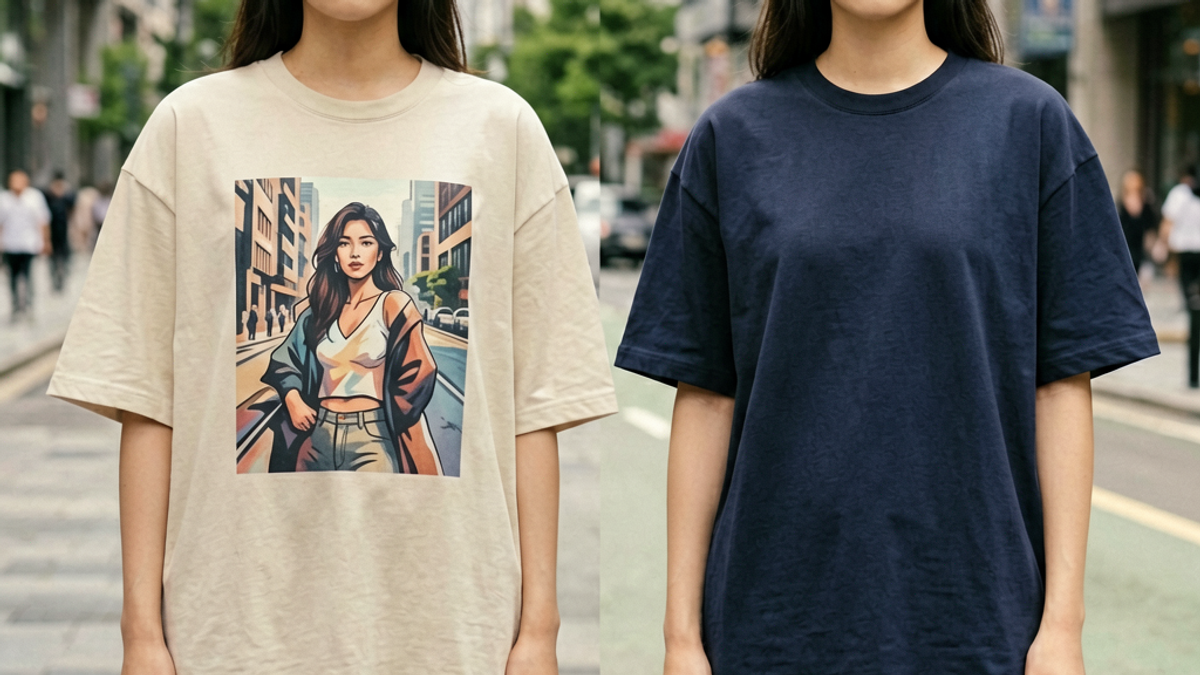
The fastest way to choose between the two is to ask one question: do you want the tee to lead the outfit, or support it? An oversized tee leads. It pulls focus through shoulder drop, sleeve extension that hits mid-bicep, and a hem that lands around mid-thigh or just below the hip. The fabric drapes away from the body, so the silhouette reads as relaxed, layered and contemporary.
A regular fit tee supports. It sits at the shoulder seam, follows the chest without pulling or billowing, and ends at the hip. The result is a line that flatters most body types and disappears under open shirts, blazers and chore coats without bunching. If you only own three tees, regular fit is the safer default because it works with everything you already own.
Neither is universally better — they solve different styling problems. The mistake is buying oversized because it looks cool on a model, then wondering why it pools at your waist and makes your frame look shorter.
When oversized tees look intentional
An oversized tee reads as a styling choice, not a sizing error, when four things line up: shoulder placement, sleeve length, fabric weight, and the bottoms underneath.
Shoulders drop 1–2 inches past your natural seam. Anything more starts to look like you borrowed your dad’s shirt. The sweet spot is what brands call “relaxed shoulder” — defined but not sloppy.
Sleeves end between mid-bicep and just above the elbow. Cropped above the bicep reads costumey; below the elbow reads as a long-sleeve attempt.
Fabric weight is 220 gsm or heavier. Lightweight cotton collapses into wrinkles and stops looking oversized — it just looks wrong. Heavyweight holds the shape that makes the cut work.
Bottoms are tapered or cropped. Wide-leg pants with an oversized tee is a costume. Cargos that taper at the ankle, cropped trousers, or slim-straight denim are what make the silhouette land.
If you nail those four points, an oversized graphic tee from the Stryxen Studio collection becomes the centerpiece of a fit rather than a casualty of bad proportion. It pairs hardest with straight, full-length denim — that’s the combination that goes wrong 90% of the time.
When regular fit is the smarter buy
Regular fit earns its place in your rotation when the rest of the outfit is doing the heavy lifting. Three situations where it’s the right call:
Layering under structured pieces. Under an open flannel, chore coat, denim jacket or blazer, a regular fit tee lays flat. An oversized tee bunches at the chest and creates bulk under every layer.
Office-casual or smart-casual dress codes. A regular fit black or white graphic tee under a wool overshirt reads intentional. The oversized version reads like you slept in it.
Heavier or taller frames. Regular fit gives shape definition without clinging. If you’re 6’1” and 200 lbs, oversized often adds visual weight where you don’t want it. Regular fit gives you a clean line that flatters the frame.
Regular fit also wins on versatility per dollar. The same tee works under a suit jacket for drinks and with shorts on Sunday. Oversized tees are more situational — they’re loud, and loud pieces need quieter days between wears.
Body type considerations
Fit preference is personal, but proportion rules apply to every body type. Here’s the honest breakdown.
Slimmer builds (under 5’9”, narrower shoulders): Regular fit gives you shape. Oversized can swallow the frame and make you look shorter. If you want oversized, size up no more than one and pair with a bottom that has structure.
Average builds (5’9”–5’11”, proportional): You can wear either cut confidently. Decide based on the look, not the body. Most oversized drops from the Stryxen Studio collection land in this sweet spot.
Broader or taller builds (6’ and up, wider shoulders): Regular fit is the safe move. Oversized works if you go one size up from your regular, not two — anything beyond that breaks the line of the shoulders.
Petite frames (under 5’5”): Regular fit, almost always. Cropped or hip-length cuts. Oversized tees at standard length will hit mid-thigh and read as a tunic, not a tee.
The 2-inch rule: regardless of build, the tee hem should never fall more than 2 inches below the hip bone unless you’re deliberately going tunic-length. That single measurement fixes more fit complaints than any other.
How to balance proportions with bottoms
The tee is only half the equation. Bottoms make or break both silhouettes, and the rule is simpler than most guides make it.
Oversized tee + slim or tapered bottom = correct. The contrast in volume is what makes the silhouette work. Straight jeans, tapered cargos, cropped trousers.
Oversized tee + baggy bottom = forward only with intent. Full-volume fits are a current streetwear code, but they require every other piece (shoes, accessories, outerwear) to be deliberate. Most people skip this.
Regular fit tee + any bottom = usually fine. Regular fit is forgiving because it doesn’t fight the bottom for visual weight.
Tee tucked or front-tucked = works with both fits if the bottoms have a defined waistband. Untucked oversized needs the bottoms to be tighter; untucked regular is the default casual.
Shoes close the proportion story. Chunky sneakers anchor an oversized fit because they add visual weight at the base. Low-tops or clean leather sneakers anchor a regular fit. Mismatching shoe weight to tee weight is the most common reason an outfit looks “off” even when every individual piece is right.
One more nuance worth naming: graphic scale changes between the two silhouettes. Oversized tees carry bigger, louder prints — think full-back illustrations, chest-spanning typography, or a hero motif that hits across the whole front panel. The extra fabric is the canvas. Regular fit tees read better with smaller, denser graphics — left-chest logos, stacked type, vintage-style prints. Trying to fit a chest-spanning print on a regular fit tee crops the design at the side seam and the graphic stops making sense. The cut of the tee should match the size of the artwork, not just the size of your body.
Key takeaways
Oversized = statement, regular = safe. Pick by what role the tee plays in the outfit.
An oversized tee works when shoulders drop 1–2 inches, sleeves hit mid-bicep, fabric is 220+ gsm, and bottoms are tapered.
A regular fit tee is the smarter buy for layering, smart-casual settings, and versatility per dollar.
The 2-inch rule fixes most fit problems: hem no more than 2 inches below the hip bone unless going tunic-length.
Match shoe weight to tee weight: chunky with oversized, low-tops or clean leather with regular fit.
The bottom line
Both silhouettes belong in a working wardrobe — the question is which one solves the styling problem in front of you. If you want volume and a current streetwear read, oversized delivers; if you want a clean line that disappears under layers and flatters most builds, regular fit is the move. The Stryxen Studio collection carries both cuts in graphic-forward designs, so the fit decision can stay with you, not with the rack.
Frequently Asked Questions
How do I know if an oversized tee fits right?
The shoulder seam should drop 1–2 inches past your natural shoulder bone, the sleeve should end between mid-bicep and just above the elbow, and the hem should land around mid-thigh or just below the hip. If the fabric is pooling at the waist or the sleeves hit past your elbows, you’ve gone one size too far up.
Is oversized the same as just buying a bigger size?
No. A true oversized tee is cut with dropped shoulders, extended body length, and wider chest measurements from the pattern stage. Buying a regular fit in XXL usually gives you a longer and wider version of the same tee, which collapses into wrinkles instead of holding the structured drape that makes oversized work.
What body type looks best in oversized tees?
Average and taller frames with proportional shoulders wear oversized tees most confidently because the cut has room to drape without overwhelming the body. Slimmer or shorter frames can still wear oversized, but should size up only once and pair with tapered bottoms to keep the silhouette from looking swallowed.
Can I wear an oversized graphic tee to work?
Only in genuinely casual workplaces. For office-casual or smart-casual settings, a regular fit graphic tee under a wool overshirt, chore coat or blazer reads as intentional. An oversized tee in the same setting reads as underdressed regardless of how expensive it is.
Free Shipping on All OrdersFree ReturnsNo Hidden Fees
 Sylvie Vance