How do athletes qualify for the 2026 Winter Olympics in women's snowboarding halfpipe?
Qualification for the 2026 Women's Snowboard Halfpipe Olympics requires meeting strict FIS standards and surviving final National Olympic Committee selection.
 Sylvie Vance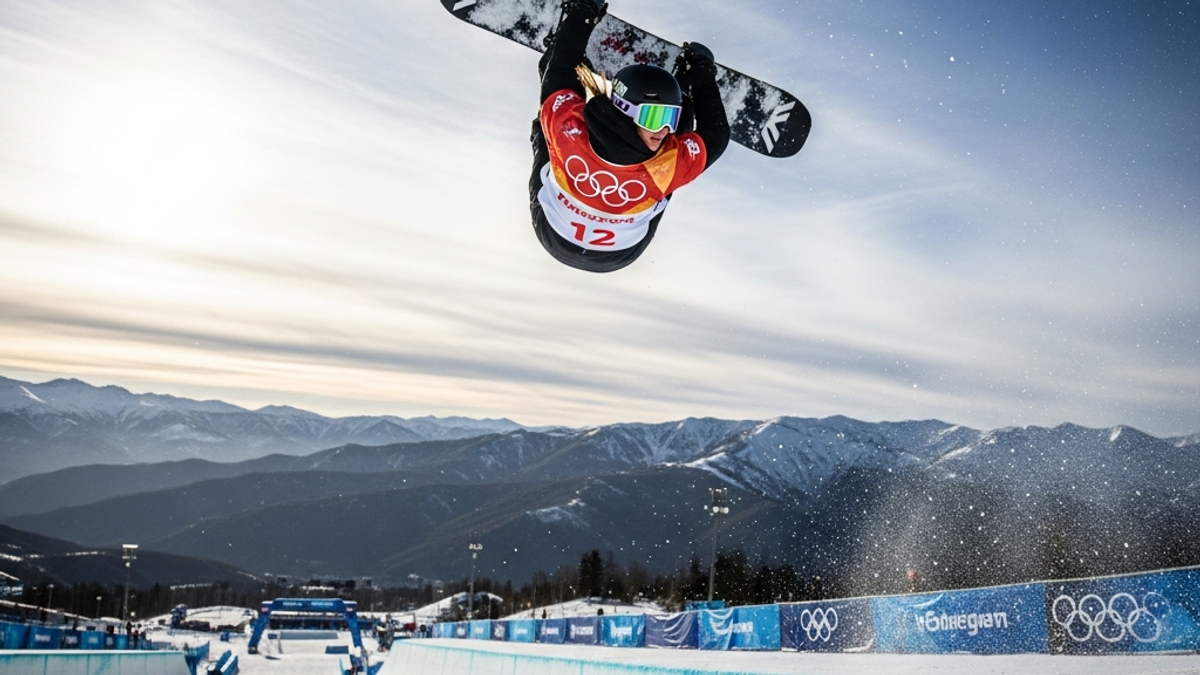
Athletes qualify for the 2026 Winter Olympics in women's snowboarding halfpipe by achieving the minimum performance standard set by the International Ski Federation (FIS)—typically requiring a minimum number of FIS points and at least one top-30 finish in a designated event—followed by being selected through their respective National Olympic Committee's (NOC) internal criteria (https://www.snowboarder.com/news/snowboarders-qualify-2026-olympics). This pathway is crucial for securing one of the limited 25 quota spots allocated for the event in Milano Cortina 2026, representing the pinnacle of athletic achievement in the sport (https://www.olympics.com/en/milano-cortina-2026/news/snowboard-how-to-qualify-milano-cortina-2026-winter-olympic-games).
### What are the minimum performance standards required for the halfpipe discipline?
The initial hurdle for any athlete aspiring to compete in the Women’s Snowboard Halfpipe at Milano Cortina 2026 involves satisfying stringent performance benchmarks established by the FIS (https://en.wikipedia.org/wiki/Snowboarding_at_the_2026_Winter_Olympics_%E2%80%93_Qualification). For the halfpipe discipline, athletes must accumulate a minimum of 50 FIS points in the event category. Crucially, alongside meeting this point threshold, the athlete must also secure at least one top-30 finish during the designated qualification period (https://www.snowboarder.com/news/snowboarders-qualify-2026-olympics). These results must be achieved in events recognized by the FIS as valid qualification competitions, usually encompassing World Cup events or World Championships, demonstrating consistent high-level performance under competitive pressure.
### What is the overall quota allocation for women's halfpipe, and how are these spots distributed among nations?
The quota system for the 2026 Winter Olympics is highly competitive, as the total number of available spots is strictly capped by the International Olympic Committee (IOC). Specifically for Women's Snowboard Halfpipe, the total quota is set at 25 athletes (https://www.olympics.com/en/milano-cortina-2026/news/snowboard-how-to-qualify-milano-cortina-2026-winter-olympic-games). Quota places are allocated to National Olympic Committees (NOCs) based on the combined performance of their athletes across the selection period, usually derived from FIS World Cup standings or World Championship results. Furthermore, nations are subject to a maximum quota limit, often allowing only a small number of athletes per gender per discipline to ensure international representation (https://en.wikipedia.org/wiki/Snowboarding_at_the_2026_Winter_Olympics_%E2%80%93_Qualification). If the host nation, Italy, has not earned a spot in the event, they are entitled to one spot, provided their athlete meets the minimum qualification standard (https://en.wikipedia.org/wiki/Snowboarding_at_the_2026_Winter_Olympics_%E2%80%93_Qualification).
### How does the qualification pathway differ from other Olympic snowboarding events like Slopestyle or Big Air?
While Halfpipe, Slopestyle, and Big Air all fall under the umbrella of freestyle snowboarding, their qualification paths can vary slightly in terms of quota distribution, though the initial FIS performance standards (50 points/top 30 finish) often remain similar (https://www.snowboarder.com/news/snowboarders-qualify-2026-olympics). The primary distinction lies in the athlete count: Halfpipe is allocated 25 spots per gender, whereas the combined Slopestyle/Big Air events are allocated a larger pool of 30 athletes per gender (https://www.olympics.com/en/milano-cortina-2026/news/snowboard-how-to-qualify-milano-cortina-2026-winter-olympic-games). This means the cut for halfpipe is intrinsically tighter on a per-athlete basis. In contrast, Parallel Giant Slalom and Snowboard Cross have different allocation structures, typically involving 32 athletes each (https://www.olympics.com/en/milano-cortina-2026/news/snowboard-how-to-qualify-milano-cortina-2026-winter-olympic-games). Importantly, an athlete who qualifies in Slopestyle or Big Air may also compete in Halfpipe if they have met the specific qualification standard for that discipline, allowing for multi-event athletes to maximize their Olympic presence (https://en.wikipedia.org/wiki/Snowboarding_at_the_2026_Winter_Olympics_%E2%80%93_Qualification).
### What role do National Olympic Committees (NOCs) play after meeting the initial FIS criteria?
Meeting the FIS minimum requirement is a necessary, but not sufficient, condition for Olympic participation; the final decision rests with the National Olympic Committee (NOC) (https://www.usskiandsnowboard.org/criteria/olympic-winter-games-snowboard-criteria). Once an athlete secures a quota spot for their nation by hitting the FIS targets, the NOC utilizes its own, often more subjective, internal selection criteria to name its final team. For instance, the U.S. Ski & Snowboard team names athletes based on objective criteria like FIS or WPSL World Rank and World Cup results, but these procedures are subject to amendment and final staff selection (https://www.usskiandsnowboard.org/criteria/olympic-winter-games-snowboard-criteria). This means an athlete might be one of the top ranked in the world but still be bypassed if the NOC prioritizes specific internal metrics, such as recent performance trends or team balance, over raw qualification scores.
### Key Takeaways for Aspiring Olympians
Navigating the road to the 2026 Winter Olympics for women's snowboarding halfpipe requires meticulous planning and relentless execution across several stages:
* **Dual Requirement:** Athletes must meet both a minimum FIS point score (50 points) **and** achieve at least one top-30 finish in a recognized event (https://www.snowboarder.com/news/snowboarders-qualify-2026-olympics).
* **Quota Scarcity:** The Halfpipe event is highly constrained, with only 25 total spots available worldwide, demanding performances that place athletes near the top of their national pool.
* **NOC Veto Power:** Successfully meeting FIS criteria only earns the *nation* a spot; the athlete’s final selection is always contingent upon the individual NOC’s published selection procedures (https://www.usskiandsnowboard.org/criteria/olympic-winter-games-snowboard-criteria).
* **Comparison to Ice Dancing:** While snowboarding qualification relies on performance metrics across seasons, figure skating disciplines like Ice Dancing rely on a separate set of criteria, often centered on rankings in specific ISU Grand Prix events and World Championships, illustrating fundamental differences in how Olympic winter sports are structured.
The future of women’s halfpipe hinges on continued progression in amplitude and technical difficulty. As the field tightens, the margin for error in qualification events shrinks, placing immense pressure on consistency throughout the two-year qualification window leading up to the Games.
## Conclusion
The journey to the 2026 Milano Cortina Winter Olympics in women's snowboarding halfpipe is a testament to dedication, requiring athletes to master not only the physics of the halfpipe but also the complex bureaucracy of international sports governance. Qualifying is a multi-layered challenge: first, achieving verifiable, high-level performance metrics set by the FIS, and second, surviving the final internal selection process dictated by one’s own National Olympic Committee. For fans and analysts tracking the next generation of dominant riders, understanding this intricate qualification matrix is key to appreciating the caliber of the athlete who ultimately earns one of those precious 25 starting positions. Who will manage the pressure and master the pathway to that icy stage in 2026?
## References
* https://en.wikipedia.org/wiki/Snowboarding_at_the_2026_Winter_Olympics_%E2%80%93_Qualification
* https://www.snowboarder.com/news/snowboarders-qualify-2026-olympics
* https://www.olympics.com/en/milano-cortina-2026/news/snowboard-how-to-qualify-milano-cortina-2026-winter-olympic-games
* https://www.usskiandsnowboard.org/criteria/olympic-winter-games-snowboard-criteria