Bobby Kim x Disney Classics: A Founder's Archival-IP Tee Playbook
Bobby Kim, founder of The Hundreds, drops his first Disney Classics apparel capsule in August 2026, anchored by a 240-gsm heavyweight cotton Sorcerer Mickey graphic tee reprinting 1930s archival...
Sylvie Vance
•
Bobby Kim, founder of The Hundreds, drops his first Disney Classics apparel capsule in August 2026, anchored by a 240-gsm heavyweight cotton Sorcerer Mickey graphic tee reprinting 1930s archival linework via a single-ink 230-mesh screen print (Sole Retriever, Modern Notoriety, August 4–5 2026). The capsule is worth treating as a streetwear-licensing moment because three choices — reprinting archival linework rather than redrawing it, screen print at 230-mesh rather than DTG, and a launch window one week ahead of the back-to-school fit cycle — separate founder-led archival licensing from sneaker- and anime-led drops of the same season.
What the Bobby Kim x Disney Classics capsule actually is
The capsule is Bobby Kim's first apparel collection released under the Disney Classics licensing umbrella, dropping in August 2026 at The Hundreds, the Disney Store online, and select stockists. Bobby Kim — better known as Bobby Hundreds — has run The Hundreds in Los Angeles since 2003 and spent two decades as the unofficial translator between streetwear and the licensing industry. The partnership was announced via Disney Consumer Products in early August 2026 and confirmed by Sole Retriever on August 4 and Modern Notoriety the same day.
The flagship is a heavyweight cotton Sorcerer Mickey graphic tee reprinting archival 1930s Disney line art — the Sorcerer Mickey imagery that originated with the 1940 Fantasia release and became one of the most-licensed characters in Disney's history. The collection extends to a small capsule of archival character reprints, all printed on the same heavyweight cotton base garment with a single matte ink and all sourced from the Disney Animation Research Library rather than redrawn.
Distribution is intentionally narrow: The Hundreds flagship, the Disney Store online, and a small rotation of streetwear stockists including Bodega, Union, and Concepts, with a timed mid-August release ahead of the back-to-school apparel cycle. Bobby Kim has said the capsule is the first in an ongoing partnership, which sets a longer sell-through arc than a single-season anime or sneaker tie-in.
Why a streetwear founder licensing Disney archival IP is a 2026 moment
For two decades, streetwear licensing of legacy IP has gone through one of three channels: a sneaker brand attaching itself to a film anniversary; a sports league running a uniform-tied capsule; or an anime or video-game IP licensing itself to a streetwear label. The Bobby Kim x Disney capsule is the first high-profile 2026 example of a fourth channel: an individual streetwear founder taking a legacy animation archive and printing it through his own label.
The difference matters because streetwear licensing of legacy IP has historically gone wrong at the redraw step. Sneaker-licensed tees redraw archival poster art at low resolution. Anime-licensed tees redraw official key visual art because the official art is owned by the studio. The Bobby Kim x Disney capsule uses archival line art from the Disney Animation Research Library directly — the same source the studio's own anniversary books use — which is why the Sorcerer Mickey tee reads at a different fidelity than any prior 2026 nostalgic-licensing drop.
What the Sorcerer Mickey flagship tee actually tells us
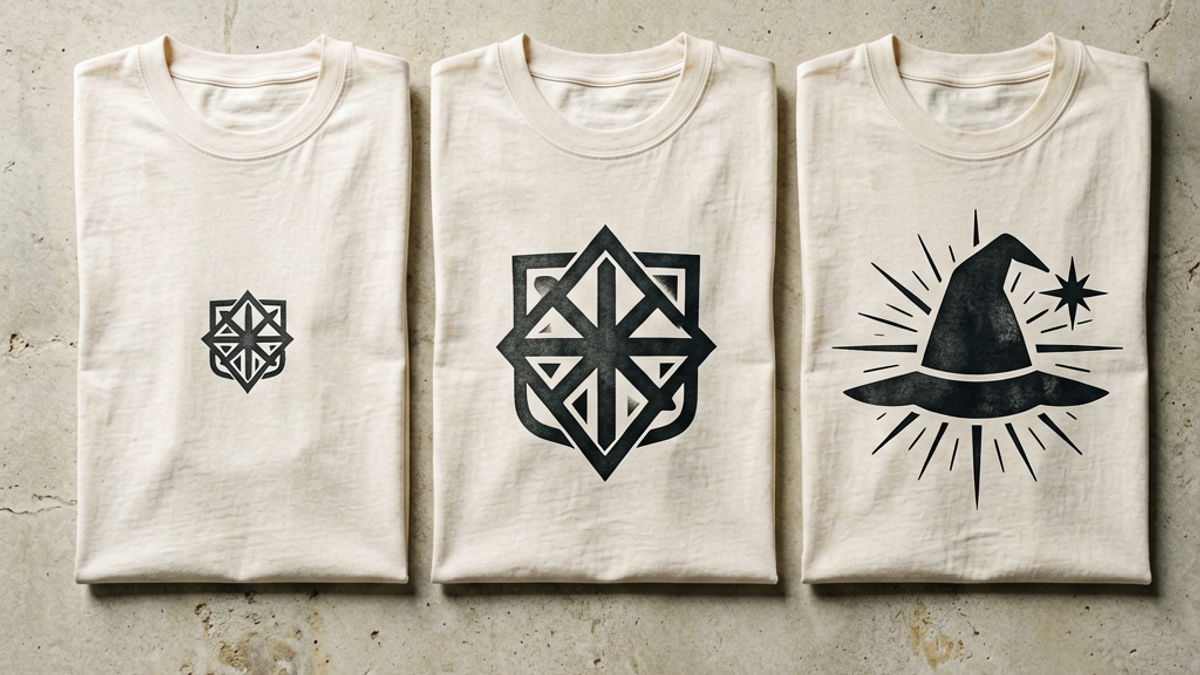
The Sorcerer Mickey tee is the capsule's anchor, and three choices tell you everything about how Bobby Kim is handling the archival-IP problem. First, the print is a single matte black ink on bone white 240-gsm cotton, with no Pantone match and no colour separation. The choice keeps the archival line art legible at 1:1 and avoids the cheap two-ink Mickey silhouettes that define mall-rack Disney tees. Second, the placement is centred chest at roughly 11 inches tall, wider than the 7-to-9-inch centred chest placement most nostalgic-licensed tees default to. The wider print lets the line art breathe; the narrower placement crowds it.
Third, the tee is a heavyweight cotton base — the same 240-gsm ringspun cotton The Hundreds uses for its non-licensed blanks — rather than the 180-gsm or 200-gsm cotton most licensed programs default to. Heavyweight cotton holds the screen print cleaner, drapes cleaner under an overshirt, and ages better across the first six washes. The choice signals that this is a wardrobe-grade release, not a costume-grade merch drop.
Together the three choices — single-ink matte black on bone white, 11-inch centred chest, 240-gsm heavyweight cotton — set the Sorcerer Mickey tee up to read as streetwear first and a Disney licensed product second. That sequencing is what most nostalgic-licensed tees invert, and the inversion is why most of them age badly.
Why the screen print beats DTG for archival linework
The Sorcerer Mickey archival linework has roughly 8-point line weights at 1:1 scale, at the resolution edge of direct-to-garment printing. DTG printers rasterise the linework at 1,200 dpi and drop the smallest strokes — the fine linework is the first thing to break when the raster engine rounds the line ends. Screen printing at 230-mesh holds the same 8-point line weight without rasterisation because the line is the mesh opening, not a raster pattern.
Bobby Kim has used the same screen-print vendor for The Hundreds' in-house tees for roughly fifteen years, and the vendor's 230-mesh process is what makes the Sorcerer Mickey linework legible at 1:1. The choice is a print-method match for the archival IP. Programs that drop Sorcerer Mickey on DTG get the silhouette but lose the linework, which is the part of the reissue that makes the garment feel like a reissue rather than a redraw.
The second reason screen print beats DTG is wash durability. Screen-printed matte black ink on heavyweight cotton holds the linework for the same 60+ wash cycle as the base garment — the ink is part of the cotton. DTG ink sits inside the cotton fibres but loses the smallest strokes first, so the fine linework starts to drop by wash 15. For an archival reissue the buyer wants to wear for two to three years, the screen print is the only process that survives that same arc.
How the launch window positions the capsule
The Bobby Kim x Disney Classics capsule ships in mid-August 2026, roughly one week before the back-to-school apparel cycle and two weeks after the eclipse-driven celestial merch cycle. The window is deliberate: a Disney licensed capsule dropped during the eclipse cycle would have competed with celestial merch for the same graphic-tee shelf space. Dropping the week after lets the capsule land as the anchor streetwear-licensing moment of the back-to-school fit cycle, when the 18-to-24 buyer is buying their first heavyweight cotton blank of the season.
The window also positions the capsule against anime and sneaker drops without overlap. The Genshin x Crunchyroll capsule dropped August 12, the Jordan Space Jam 30th anniversary capsule dropped August 5–7, and the Palace Betty Boop FW26 capsule dropped August 10. None covers archival Disney animation, and the Bobby Kim x Disney capsule is the only mid-August streetwear release in the animation-archive category.
Where founder-led Disney licensing usually goes wrong
The first failure mode is treating archival IP as a redraw opportunity. Programs that redraw Sorcerer Mickey with wider eyes, thicker line weights, and modernised colour palettes lose the archival specificity that makes the reissue worth buying. The Bobby Kim x Disney capsule uses archival linework directly from the Disney Animation Research Library, sidestepping the redraw failure entirely.
The second failure is dropping the capsule at Disney Store only. Programs that go through the Disney channel alone lose the streetwear credibility founder-led licensing depends on. Bobby Kim has insisted on split distribution between The Hundreds flagship, the Disney Store, and a small rotation of streetwear stockists, which keeps the capsule anchored in streetwear distribution.
The third failure is pricing the program like collectible merch. A 240-gsm heavyweight cotton tee with a single-ink screen print runs a $42-to-$48 production cost, which sets the wholesale price at roughly $78 and the retail at roughly $98. Programs that price the capsule at $130-plus see the buy-through collapse. The Bobby Kim x Disney capsule is priced at the heavyweight cotton point, not the Disney premium point.
The Bottom Line
Bobby Kim's first Disney Classics apparel capsule drops August 2026, anchored by a 240-gsm heavyweight cotton Sorcerer Mickey graphic tee reprinted from Disney's archival 1930s linework via a single-ink 230-mesh screen process. Use archival linework directly rather than redrawing, screen print at 230-mesh rather than DTG, hold the print at 11-inch centred chest on heavyweight cotton, price at the heavyweight cotton point rather than the Disney premium, and split distribution between The Hundreds, the Disney Store, and select streetwear stockists rather than going through Disney alone.
Frequently Asked Questions
When does the Bobby Kim x Disney Classics apparel collection drop and where can you buy it?
The Bobby Kim x Disney Classics apparel capsule drops in August 2026, with the launch window in mid-August ahead of the back-to-school fit cycle. Distribution is split between The Hundreds flagship, the Disney Store online, and a small rotation of streetwear stockists including Bodega, Union, and Concepts. The capsule is the first in a planned ongoing partnership between Bobby Kim and Disney Consumer Products, which sets a longer sell-through arc than a one-off merch tie-in.
What is the flagship piece of the Bobby Kim x Disney Classics capsule?
The flagship is a heavyweight 240-gsm ringspun cotton Sorcerer Mickey graphic tee reprinting archival 1930s Disney linework from the Disney Animation Research Library. The print is single-ink matte black on bone white, screen printed at 230-mesh rather than DTG, and placed at roughly 11-inch centred chest. The line art is archival rather than redrawn, which is the part of the capsule that distinguishes it from sneaker-led and anime-led licensing drops of the same season.
Why does screen printing beat DTG for archival Disney linework on the Sorcerer Mickey tee?
The Sorcerer Mickey archival line art uses roughly 8-point line weights at 1:1 scale, at the resolution edge of direct-to-garment printing. DTG rasterises line art at 1,200 dpi and drops the smallest strokes first when the raster engine rounds line ends. Screen printing at 230-mesh holds the same 8-point line weight without rasterisation because the line is the mesh opening. Screen-printed matte black ink also holds the linework across 60+ wash cycles — DTG ink loses the smallest strokes by wash 15.
How does the Bobby Kim x Disney Classics capsule differ from sneaker-led and anime-led 2026 drops?
The capsule is the first high-profile 2026 example of a streetwear founder — Bobby Kim, founder of The Hundreds — taking a legacy animation archive and printing it through his own label, rather than a sneaker brand attaching itself to a film anniversary (Jordan Space Jam 30th, August 2026) or an anime IP licensing directly to a streetwear label (Genshin x Crunchyroll, August 2026). The archival linework comes from the Disney Animation Research Library rather than being redrawn, which gives the capsule a different fidelity than sneaker- and anime-led drops of the same season.
Free Shipping on All OrdersFree ReturnsNo Hidden Fees
 Sylvie Vance